Our story
It started with my nephew.
By Manmeet Maggu, co-founder and CEO of Trexo Robotics.
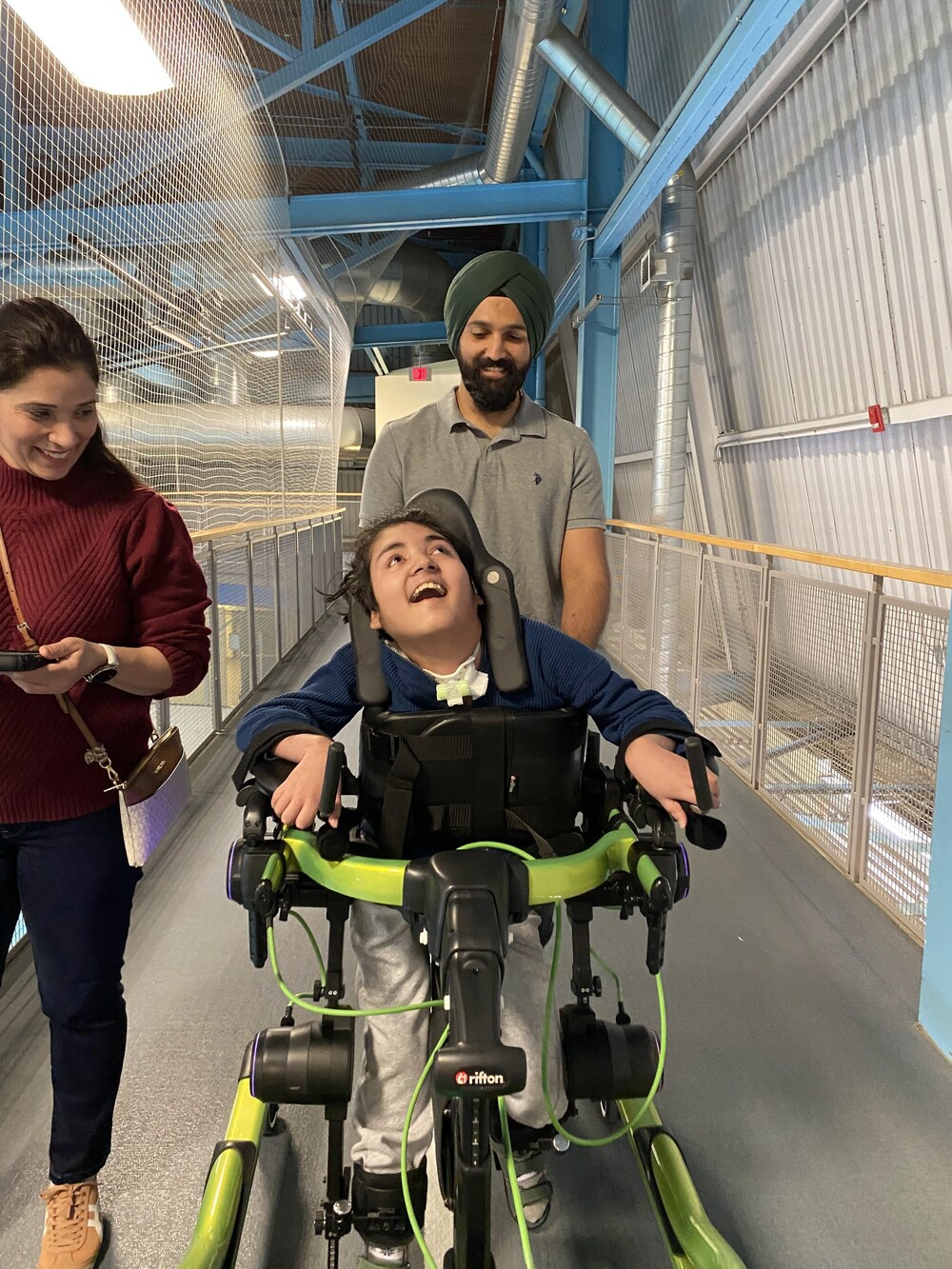
Before Trexo was a company, it was a question our family could not answer: how could we help Praneit experience walking?
My nephew has cerebral palsy. He could not walk independently, and our family searched for something that could give him the support he needed. We were not looking to start a business. We were looking for a solution for someone we loved.
I was studying mechatronics engineering at the University of Waterloo. My friend Rahul Udasi shared that background. When we could not find a suitable solution, we started working on one ourselves.
Two engineers. One very personal reason to keep going.
The idea followed us to the University of Toronto, where I pursued an MBA at Rotman and Rahul a master's in engineering. We began turning the project into a company, with help from the university's startup community.
In 2016, we packed a prototype into a suitcase and took it to India. Praneit tried it in his family's living room. It needed adjustments before it worked. Then he took steps with the robot we had built.
That was not a finished product. It was a reason to keep building.
A first step was only the beginning.
In June 2018, Praneit visited our office in Mississauga and tried a newer version. We took time to adjust the setup so he was comfortable. When the robot began moving his legs, he smiled. I wrote about that visit because it captured what this work meant to our family.
Building Trexo meant learning from the children, parents and physiotherapists using it. We co-design with those families and clinicians, putting each child's comfort and physical needs at the center of our design decisions.
Built for life beyond the prototype.
Our ambition was not to stop at a demonstration. It was to make supported walking something families could bring into everyday life at home. That is why we chose to build a company around the idea.
Making the device was one challenge. Making it accessible to more families was another. In 2023, I wrote openly about the cost of building, supporting and improving Trexo, and the work still needed on funding and insurance. That work is part of the mission.
The company grew. The reason did not change.
In July 2026, Trexo marked ten years. We looked back on a project built at a dining room table, the early prototypes, and the families, clinicians and team members who helped shape what came next.
Praneit is where this story began. The responsibility now reaches beyond our family.
Our goal is technology that physiotherapists can rely on, families can afford and children enjoy using. Affordability remains something we are working toward.
TEDxYouth@BeaconStreet
The story, in Manmeet's own words.
“How I made a Robot to help my Nephew Walk,” Manmeet's TEDx talk.
Meet Trexo.
Learn how Trexo Theo works and what the US journey involves.